Roofing for the Freight Operators Who Run Laredo's Inland Port
You are not deciding whether to fix a leak. You are an operations director, a cross-dock general manager, or a facilities lead for a 3PL running freight through the busiest inland port in the country, and a roof problem is a threat to a dock schedule that cannot slip. We write scope around that reality first.
The World Trade Bridge Does Not Pause for a Roof Crew
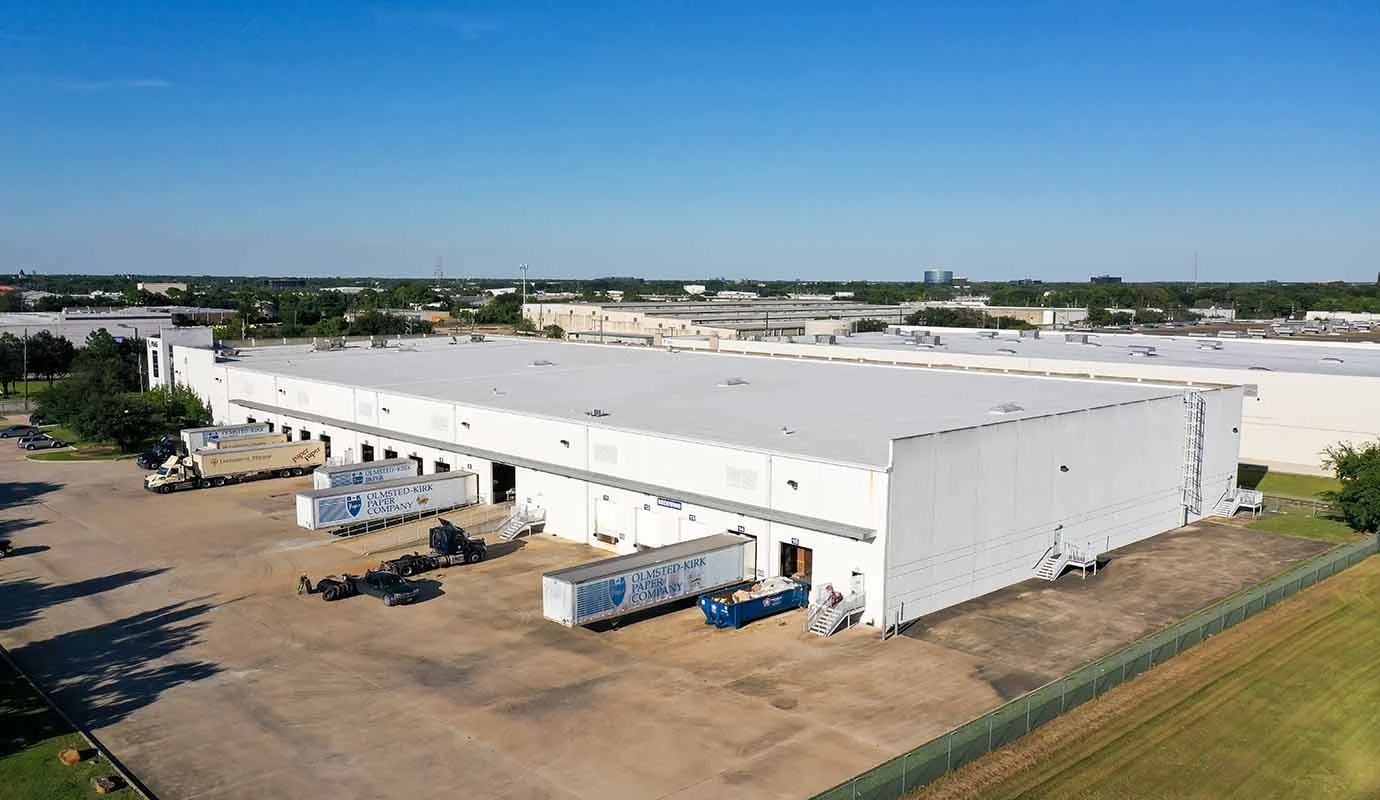
Trucks queue for the World Trade Bridge around the clock, and the cross-dock buildings feeding that traffic in Killam Industrial Park and the Unitec parks run three shifts. A roof problem over an active dock door is not a maintenance item you schedule for next month; it is water sitting over freight that has to move today. We plan staging, material lifts, and crew access around live dock doors and trailer lanes instead of asking a facility to shut a door so we can work.
That means walking the roof with whoever runs the yard before we walk it with a foreman. Trailer positions change hour to hour, and a lift zone that is open at 7 a.m. can be blocked by staged pallets by 9. We confirm the access window with the people who control the yard, and we treat their sign-off as equal to whoever's name is on the work order.
Cross-Dock Roofs Take a Different Kind of Abuse Than a Retail Box
A distribution building is not a flat lid over open floor space. It carries conveyor penetrations, dock leveler equipment below the edge, mezzanine office HVAC curbs, sprinkler riser vents, and a walking path worn by whoever services the rooftop units every week. Each of those is a place where a membrane fails first, long before the field of the roof shows wear.
Before we price anything, we document the specific things that matter on a distribution roof rather than treating it like a generic flat-roof estimate:
- Condition and flashing at every conveyor and dock-leveler penetration
- Curb height and seal quality on mezzanine and office-pod HVAC units
- Wear pattern along the maintenance walk path to rooftop equipment
- Drain and scupper capacity relative to the building's actual roof area
- Edge metal condition where trailer traffic vibration reaches the perimeter
- Prior patch history and whether old repairs are compatible with the current membrane
That list becomes the baseline for every recommendation that follows, whether the answer is a targeted repair or a full recover.
Bonded Cargo Means the Roof Call Has a Compliance Layer
A share of the warehouse space feeding the World Trade Bridge sits inside Foreign-Trade Zone status or otherwise holds bonded cargo under CBP oversight. Getting a crew onto that roof is more than a scheduling question. We coordinate escort requirements, badge or ID needs, and restricted-hours access ahead of the work date so a bonded warehouse operator is not explaining an unscheduled contractor to a customs officer.
We keep that coordination in writing. If your compliance team needs a crew roster, vehicle list, or entry log before we show up, that request goes into the job file the same day it is made, not the day before mobilization.
One Roof, Multiple People Who Need to Sign Off On It
Much of Laredo's logistics real estate is owned by a developer or REIT and operated by a 3PL under a lease, which means a roof report has to satisfy three audiences at once: the tenant who called about the leak, the landlord who owns the capital decision, and sometimes a lender reviewing the asset. We write the report so it stands on its own for whichever of those readers picks it up first.
That report separates what needs attention now from what is a future capital item, with photos tied to specific roof zones instead of a general narrative. When a lease is renewing or a building is trading hands, that same file becomes the roof's paper trail instead of a memory someone has to reconstruct.
Border Heat Wears a Roof Differently Than Hail Does
Laredo does not get the hail load that shows up further north in Texas, but sustained triple-digit summer heat and long UV exposure fatigue a membrane in their own way, especially near black asphalt yards that radiate heat back up at the roof edge. When a tropical system pushes moisture up from the Gulf or from Mexico's coast, wind-driven rain finds the same aged seams and curb flashings that heat already weakened. We size the membrane and coating recommendation around that combination rather than a generic storm-damage script.
See our silicone roof coating options for extending a UV-fatigued membrane before it needs full replacement.
Questions Freight and Warehouse Operators Ask Before They Sign Off
Can you work without shutting down an active dock door?
In almost every case, yes. We sequence the work by section and coordinate directly with your yard supervisor so trailer traffic and loading continue on the doors we are not actively working over.
How do you handle a building with CBP-bonded or FTZ restrictions?
We get the entry, escort, and documentation requirements confirmed before the crew is scheduled, not after. If your compliance team needs advance notice or a badge list, that becomes part of the job file.
Who gets the roof report if we lease the building?
We can send the report to the tenant, the landlord, or both. We write it so a facilities manager, a property owner, and a lender reviewing the asset can all use it without a translation step.
Does the border heat change what membrane you'd recommend?
Often, yes. Reflective TPO or a silicone coating over an existing membrane can outperform a darker system here because the exposure is relentless sun and thermal cycling rather than winter freeze-thaw.
What happens if a leak shows up over staged inventory?
We treat that as an emergency dry-in call, not a scheduled repair. Protecting the freight below the roof comes before any conversation about the permanent fix.