Distribution Center Roofs That Answer to What's Racked Below
Laredo's inland-port distribution centers pack pallet racking, conveyor lines, and sortation equipment right up to the roof deck, which means every skylight, smoke vent, and sprinkler penetration on that roof has to work exactly as designed. We handle distribution center roof work with that reality in mind, not as a generic flat-roof job.
Skylights and Smoke Vents Are Non-Negotiable Here
Distribution centers built for pallet-height racking depend on roof-mounted smoke vents and skylights for life-safety code compliance, and those units take a beating from Laredo's UV load faster than the surrounding membrane does. A cracked skylight dome is a code problem before it's a leak problem.
We inspect every roof-mounted vent and skylight on its own schedule, because a distribution center with hundreds of thousands of square feet of open floor below can't treat a smoke vent failure as routine maintenance.
When we replace these units we match the fire and smoke rating the building's occupancy classification requires instead of whatever happens to fit the curb.
We also test that skylights and vents still operate correctly once installed, since a unit that looks watertight from below can still be stuck or corroded in a way that would keep it from venting properly if it were ever actually needed.
Tenant Improvements Leave a Patchwork of Roof Ages
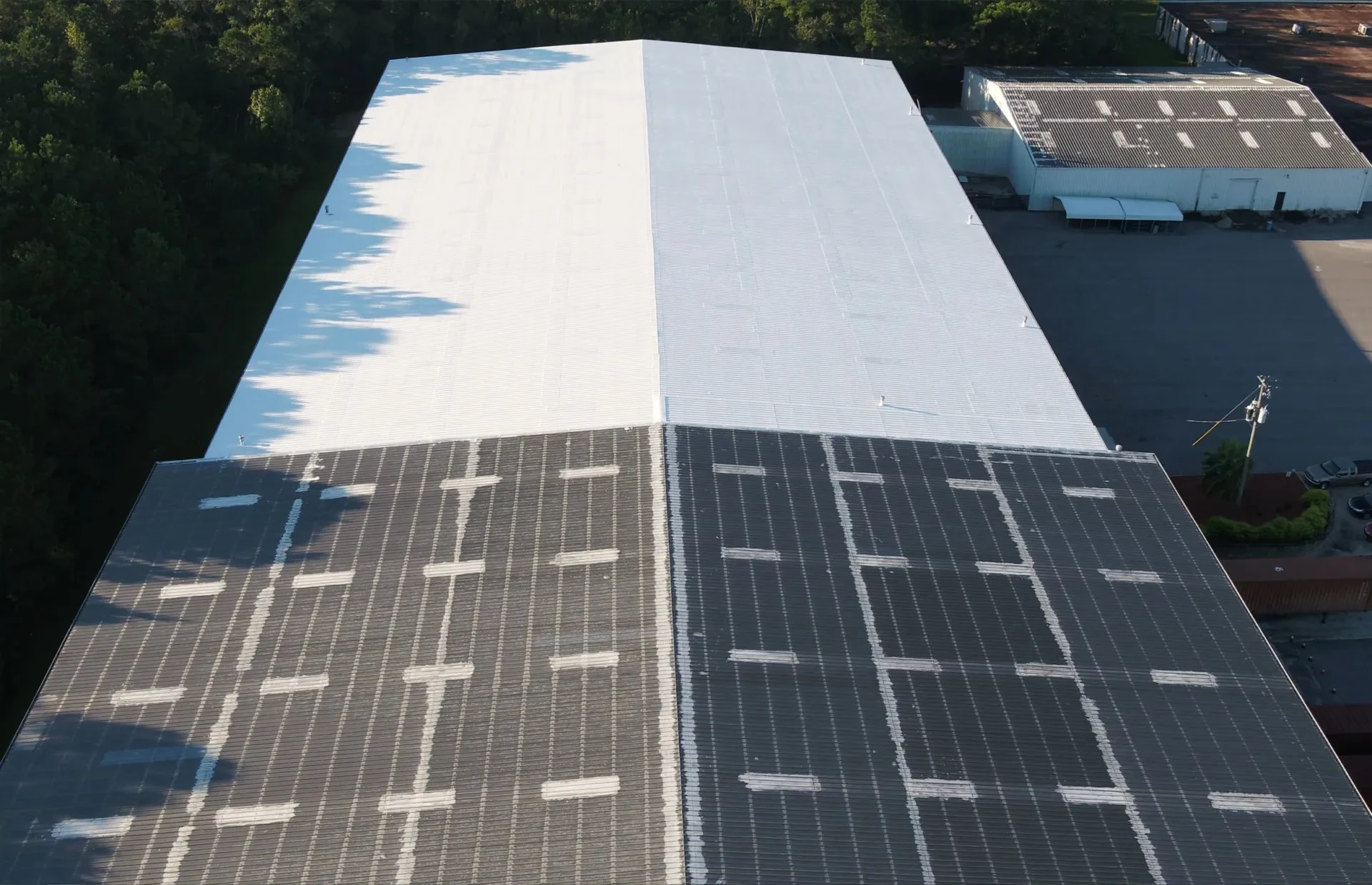
A distribution building leased and re-leased over the years usually has a roof with several different ages and sometimes several different systems, because each tenant improvement project added dock doors, HVAC curbs, or racking-related equipment without necessarily involving the roofing contractor who did the original install.
We map these sections before quoting anything, because a tie-in between an older membrane and a newer patch is where most distribution center leaks actually start, not in the field of either section.
Getting the tie-in detail right the first time avoids a callback six months later when that seam works loose under thermal movement.
On a building that's changed hands or changed tenants several times, we also ask for whatever roof warranty paperwork still exists, since a tie-in done under an active manufacturer warranty sometimes has to follow a specific detail to keep that coverage intact.
Fall Protection and Roof Access Near Racking
Roof access on a distribution center with racking pushed close to the exterior wall changes how our crews stage material and where they can safely set up fall protection anchors. We plan access routes before the crew shows up, not after.
Coordinating with the warehouse management system's putaway schedule matters too, since a crew working over an active pick zone needs sign-off from whoever's running the floor that day.
We keep our footprint tight on these roofs and communicate directly with facility management about which sections of the building are off-limits during active operations.
Where a distribution center runs conveyor or sortation equipment tied into the roof structure itself, we also confirm load points and anchor locations with facility engineering before setting foot on that section, since an assumption about what the deck can support is not something we're willing to make on a building this size.
- Roof-mounted smoke vent and skylight replacement
- Tie-in detailing between tenant improvement roof sections
- Membrane replacement and recover for large flat decks
- Rooftop HVAC curb and penetration flashing
- Scheduled inspection coordinated with facility operations
- Storm damage assessment and documentation
Documentation That Matches What a Property Manager Needs
Distribution centers near the World Trade Bridge are often owned by an out-of-state investment group and managed locally by a property management firm, which means our reports have to stand on their own without a phone call to explain them.
We photograph every section we inspect, note the roof age and system where we can determine it, and flag anything that needs near-term attention versus anything that's cosmetic.
When storm damage hits, that same documentation habit becomes the insurance claim file, which is why we build it into every inspection instead of only pulling it out after a hailstorm.
We're honest about scope, too. If a section is aging but still sound, we say so instead of recommending replacement early just to have a bigger project on the books, and if a section needs attention now, we explain exactly why in terms a facilities director can act on without a site visit.
For distribution buildings held by a real estate investment trust, we've found that annual inspection reports also feed directly into the asset's capital planning cycle, so a consistent report format year over year matters as much as the findings inside any single visit.
Distribution Center Roof Questions We Hear Most
How do you handle roofs with multiple tenant improvement patches?
We map each section, identify where the tie-ins are, and quote the seams separately from the open field, since that's usually where the risk actually sits.
Can roof work happen while the building is fully racked and operating?
Yes, with coordination. We plan crew access and staging around the areas your floor team has locked down for active picking or receiving.
Do smoke vents need to match the original manufacturer?
Not necessarily, but the replacement has to meet the same fire and smoke rating the building's occupancy classification calls for, and we specify accordingly.
How often should a distribution center roof get inspected?
Twice a year at minimum, plus after any hail or high-wind event, given how much roof-mounted equipment these buildings carry.
What's the biggest cause of distribution center roof leaks you see in Laredo?
Tie-in seams between different tenant improvement eras of the roof, more than failure in the open membrane field.