Black EPDM: Where It Still Makes Sense in Laredo
Black EPDM isn't the default membrane we reach for on a new Laredo roof, and we say that plainly before an owner asks. It absorbs heat instead of reflecting it, which is the wrong property in a climate that sits above 100 degrees for weeks most summers. That said, there are specific situations where black EPDM is still the right call, and we'll spec it in those cases without apology.
The Heat-Absorption Tradeoff
A black membrane surface runs measurably hotter than a white one under direct Laredo sun. On a building where that heat load matters - an occupied space right under the deck, older HVAC equipment already working hard - that tradeoff is real and we account for it in the recommendation. On an unconditioned storage building or a roof over a space that's already mechanically cooled independent of roof temperature, the tradeoff matters much less.
Recover Situations Where Black EPDM Fits
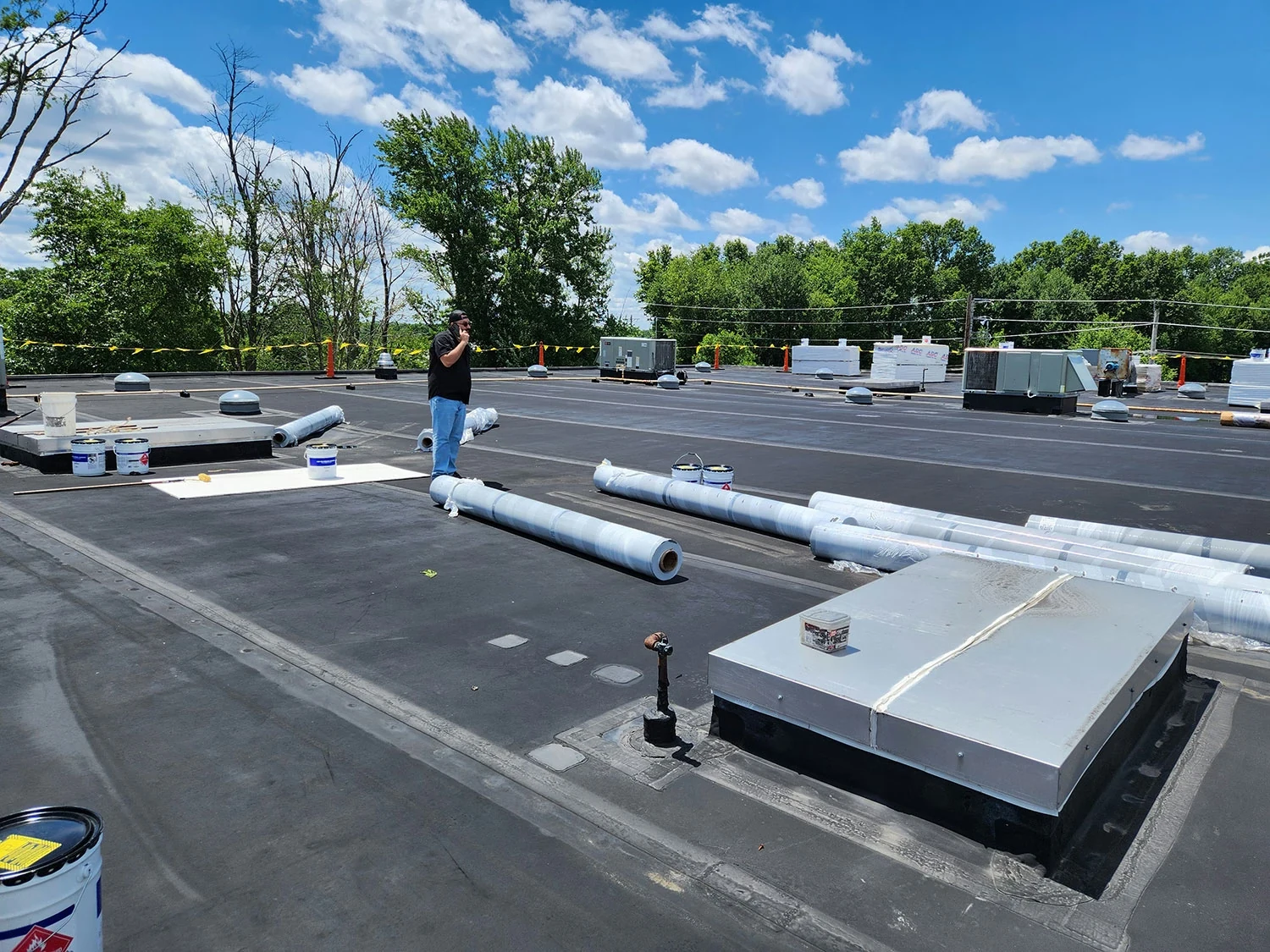
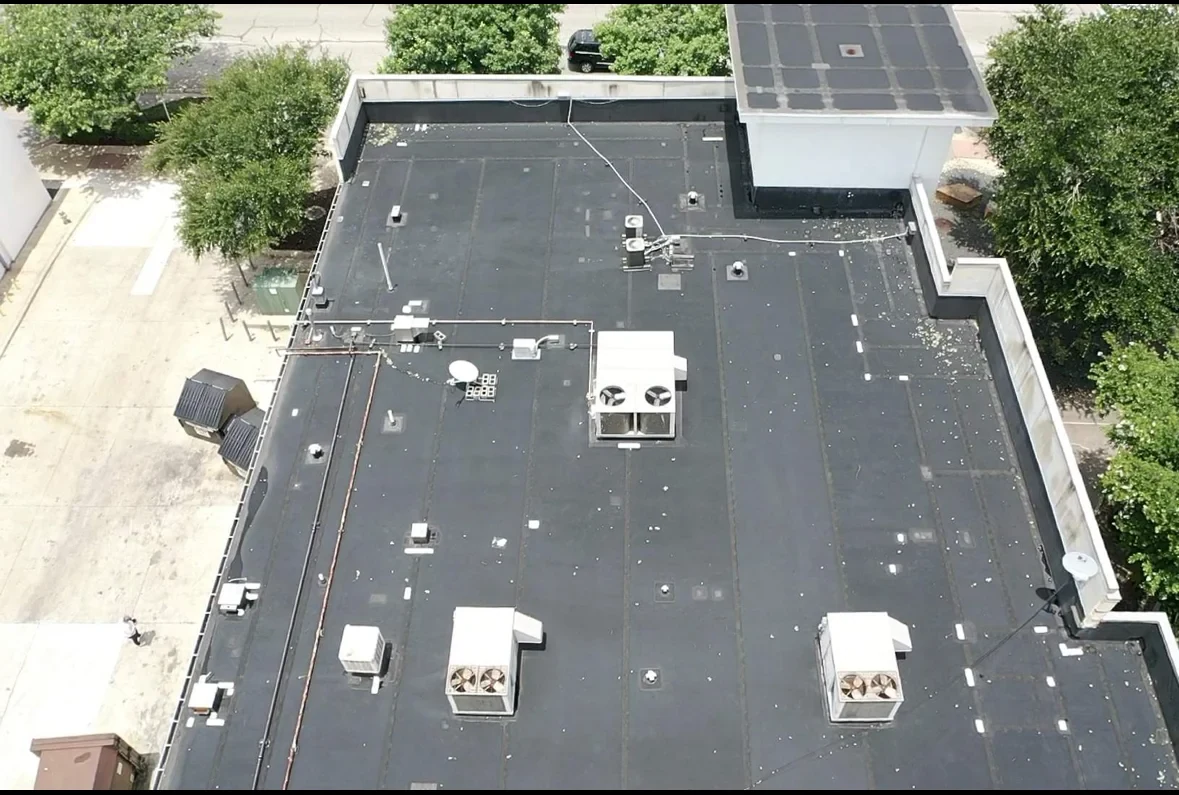
The most common reason we still install black EPDM is a recover job on a building that already has a black EPDM roof performing fine structurally, where the owner wants to extend service life without switching membrane chemistry mid-building. Mixing membrane types across additions or adjacent roof sections creates flashing and compatibility headaches at the tie-in that are worse than just staying consistent with what's already up there.
We also see black EPDM specified on buildings where the roof is largely hidden from view behind a high parapet and reflectivity isn't going to move the building's cooling load enough to justify a membrane switch during a routine replacement.
Seam Chemistry and Movement Over Old Decks
EPDM's seam adhesive behaves differently than TPO's heat-welded seams, and on an older deck with some settling or movement already present, EPDM's flexibility can actually be an advantage. The rubber sheet tolerates a certain amount of deck flex without the seam integrity issues that a stiffer membrane might show on the same substrate. We look at deck condition specifically before deciding between EPDM and a single-ply alternative on any re-cover.
Ballast and Attachment Options on These Roofs
Black EPDM can be installed mechanically fastened, fully adhered, or ballasted with stone, and the choice affects both cost and wind performance. Ballasted EPDM is rare on new Laredo work because a ballasted roof needs structural capacity for the added dead load, and most of the buildings where black EPDM still makes sense today are recover jobs on structures that weren't necessarily designed with that extra weight in mind. We check the structural drawings before ballast is even discussed as an option, rather than assuming any building can carry it.
Coating Black EPDM to Fix the Reflectivity Problem
For an owner who wants to keep EPDM's seam and flexibility characteristics but fix the heat-absorption issue, a reflective acrylic or silicone coating over the existing black membrane is a real option. It doesn't turn black EPDM into a fully reflective white membrane, but it meaningfully cuts surface temperature and extends the membrane's service life by reducing UV degradation of the rubber itself.
- Existing membrane condition assessed before recommending coat vs. recover vs. replace
- Seam integrity checked across the entire field, not sampled
- Flashing and curb detail inspected at every penetration
- Ponding areas identified and addressed before coating goes down
- Coating manufacturer's substrate prep requirements followed exactly, not approximated
What We Won't Recommend It For
We don't spec new black EPDM on a large unbroken warehouse roof where reflectivity has a real, measurable effect on rooftop unit run-time and energy cost. On those buildings the heat-load math favors white TPO or white EPDM clearly enough that recommending black EPDM would be doing the owner a disservice for no real benefit to us. We also avoid it on any roof where an insurance carrier or lender is asking about reflectivity as part of a building certification requirement.
If a building owner specifically wants black EPDM against our recommendation - sometimes for cost or aesthetic reasons on a low-visibility roof - we'll install it correctly and document why the decision was made, but we won't suggest it as a first option on new work.
Questions About Black EPDM in This Climate
Why would anyone still choose black EPDM in a hot climate like Laredo's?
Mainly consistency with an existing roof system during a recover, deck movement tolerance on older buildings, and cost on projects where reflectivity isn't the deciding factor.
Does black EPDM cost less than white membrane options?
Material cost differences between black and white EPDM are generally modest; the bigger cost consideration is usually membrane type - EPDM vs. TPO vs. PVC - rather than color within EPDM itself.
Can I coat an old black EPDM roof instead of replacing it?
Often yes, if the membrane is still structurally sound and seams are intact. We inspect the whole roof before recommending a coating, since a coating over a failing membrane just delays a bigger problem.
How long does black EPDM typically last here compared to a cooler climate?
UV and thermal cycling are harder on any membrane in Laredo's climate than in a milder one, and black EPDM's higher surface temperature accelerates that aging somewhat compared to a reflective membrane, which is part of why we don't default to it on new installs.
Is black EPDM a fire or wind-rating concern?
EPDM systems carry standard wind uplift and fire ratings like other single-ply membranes when installed to the manufacturer's fastening and assembly specification; we design the fastening pattern to the wind zone the same way we would for TPO or PVC.