PVC Membrane Roofs for Grease, Chemical, and Rooftop Equipment Exposure
PVC single-ply membrane comes up most often in Laredo on roofs with something the membrane has to resist beyond weather: grease exhaust near restaurant kitchens, oils and fuels around rooftop equipment, or heavy foot traffic from technicians servicing condensers and exhaust systems.
Chemical and Grease Resistance
PVC resists petroleum-based oils, greases, and many industrial chemicals better than TPO or EPDM, which makes it a common choice near restaurant exhaust fans, fueling areas, and rooftop equipment that leaks oil over time. On a distribution building with rooftop refrigeration units serviced regularly, that resistance protects the membrane from the small oil and refrigerant residue that accumulates around service points.
We see this most on quick-service restaurant roofs and food-related distribution buildings, where grease-laden exhaust settles on the roof surface near vent hoods. A membrane that is not chemical-resistant can soften and degrade in those exact spots faster than the rest of the roof ages.
Heat Welding and Seam Strength
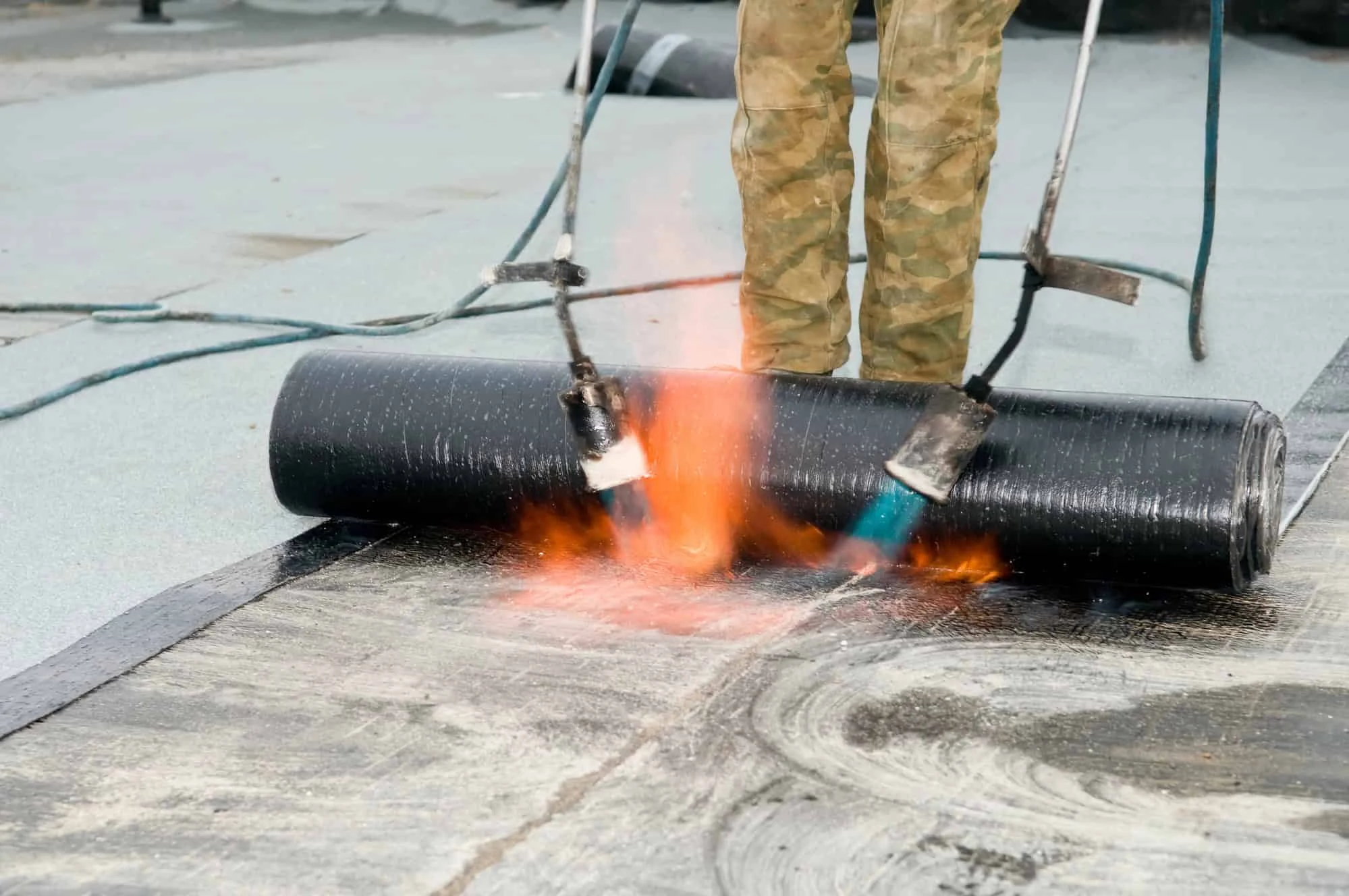
Like TPO, PVC seams are heat-welded, and the membrane's chemistry allows for a strong, consistent weld when installation conditions are controlled. In Laredo's heat, that means the same scheduling discipline TPO installs require, working around deck surface temperature rather than against it, applies to PVC as well.
PVC seams generally test as some of the strongest in single-ply roofing when welded correctly, which is one reason it holds up well on roofs with above-average foot traffic, since seam strength matters more where technicians are regularly walking the membrane to reach rooftop units.
Where PVC Fits in Laredo
Beyond restaurant and grease exposure, PVC shows up on roofs with heavy rooftop mechanical equipment: cold storage and reefer facilities with multiple condensing units, buildings with solar arrays planned for the roof, and any structure where technicians access the roof frequently for maintenance.
It is a less common choice for simple, low-traffic warehouse fields where TPO already does the job at a lower cost. We scope PVC in for the specific condition that calls for it rather than defaulting to it across every building type.
Fast-food and quick-service restaurant buildings along the Bob Bullock Loop and the retail corridors feeding it are a recurring example. These are small roofs by warehouse standards, but the kitchen exhaust load per square foot is high, and a membrane that cannot shed grease residue tends to soften around the vent hood years before the rest of the roof shows any wear at all.
- Restaurant and food-service roofs with grease-laden exhaust near vent hoods
- Cold storage and reefer facilities with dense rooftop condenser equipment
- Roofs with frequent technician foot traffic for HVAC or refrigeration service
- Buildings near fueling areas or with petroleum exposure risk
- Roofs planned for future rooftop solar array installation
Cost and Longevity Trade-offs
PVC typically costs more than TPO per square foot, which is the main reason it is not the default choice across every low-slope roof in Laredo. On a building without grease, chemical, or heavy foot-traffic exposure, that added cost does not buy much additional performance over a good TPO installation.
Where the exposure is real, though, the cost difference is usually smaller than the cost of premature membrane failure. A restaurant roof that needs full replacement years early because grease degraded a non-resistant membrane costs more in the long run than paying more upfront for PVC.
We walk through both numbers with the owner before recommending either membrane: the lower upfront cost of TPO against the added protection PVC gives a roof that faces genuine chemical or grease exposure. On a distribution building with a single rooftop generator or fuel line, that decision usually comes down to one or two penetration points rather than the whole roof field, which keeps the added cost of PVC limited to where it is actually earning its keep.
Inspection Priorities on PVC Roofs
We check seams, flashing, and any area near grease exhaust or rooftop equipment first, since those are the points most likely to show early wear even on a chemical-resistant membrane. Plasticizer loss over time can make older PVC membranes more brittle, so we also check flexibility at seams and corners on roofs approaching the back half of their expected service life.
Ponding is checked the same way it is on any single-ply membrane. PVC resists standing water reasonably well, but persistent ponding still accelerates aging and should be addressed as a drainage issue rather than tolerated because the membrane can handle it in the short term.
PVC Roofing Questions From Building Owners
Why would a roof need PVC instead of TPO?
Grease, chemical, or petroleum exposure, or heavy rooftop foot traffic, are the usual reasons. Without one of those conditions, TPO often performs just as well at a lower cost.
Does PVC handle Laredo's heat as well as TPO?
Yes, PVC performs comparably under heat and UV exposure, and both membranes require the same careful seam-welding schedule during the hottest parts of the day.
Is PVC a good fit for a restaurant roof?
Often, especially near exhaust vents where grease residue accumulates. The membrane's chemical resistance holds up better there than standard single-ply options.
How do you check an older PVC roof for problems?
We check seam integrity and membrane flexibility at corners and penetrations, since plasticizer loss over time can make aging PVC more brittle in those areas first.
Does PVC cost more to install than TPO?
Generally yes, per square foot, which is why we recommend it for roofs with a specific exposure risk rather than as a default across every building.