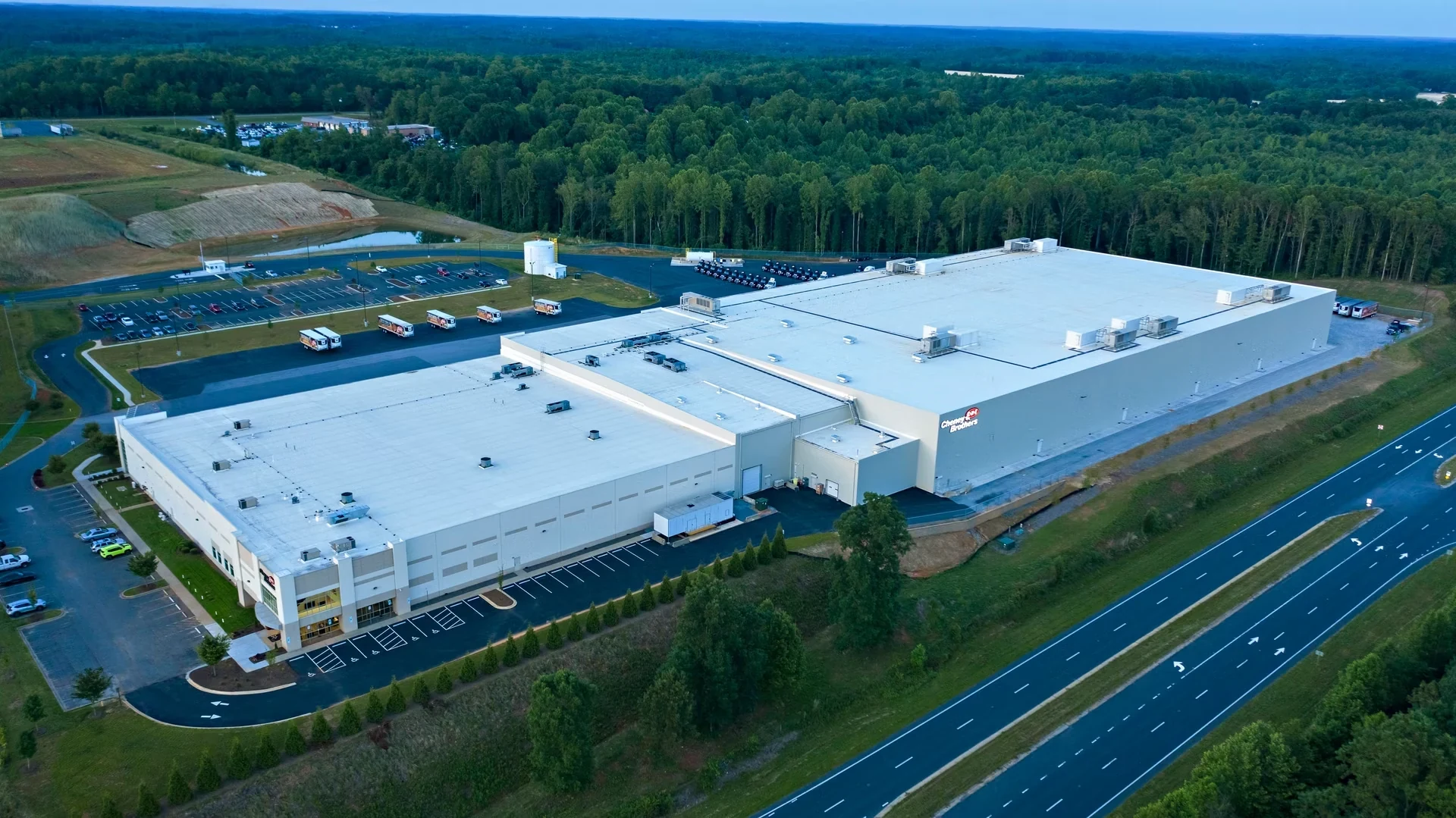
Roof Work for the Cold Chain That Cannot Go Down
A produce importer moving avocados or berries through a cross-border cold facility does not have a maintenance window in the way an office building does. The refrigeration runs continuously, the product has a shelf clock ticking against it, and a roof crew that does not understand what a vapor barrier is protecting can cause more damage than the leak they were called to fix.
A Cold Storage Roof Fails From the Inside Out
On a conditioned warehouse, a roof leak is a water problem. On a cold storage building, warm humid air finding its way through a compromised vapor barrier condenses inside the insulation, and that moisture does not dry out on its own the way it would in an ambient building. By the time a stain shows up on the ceiling, the insulation underneath may already be waterlogged and losing R-value, which shows up later as a refrigeration load the plant's compressors were never sized for.
We treat vapor barrier continuity as the primary thing we are protecting, not an afterthought behind the membrane. Every penetration, curb, and seam gets checked for vapor drive as carefully as it gets checked for water intrusion.
Produce Import Warehouses Run on a Clock the Roof Has to Respect
A share of the cold storage capacity near the World Trade Bridge exists specifically to receive, inspect, and re-ship produce crossing from Mexico, which means the building's schedule is tied to truck arrivals and USDA inspection windows, not a fixed shift schedule we can plan around from a distance. We confirm receiving hours, dock availability, and product-handling blackout periods with the plant before we set a mobilization date.
That conversation happens with whoever runs the floor, because a roof section over an active receiving dock is off-limits at different hours than a section over dry storage.
What a Pre-Work Walk on a Cold Facility Actually Checks
- Vapor barrier continuity at every curb, pipe penetration, and drain
- Insulation condition and any signs of trapped moisture from thermal imaging or core samples
- Condensation staining patterns on the interior ceiling below suspect roof zones
- Refrigeration unit curb seals and condensate line penetrations
- Door and dock seal condition where interior humidity meets outside air
- Membrane condition specifically at the perimeter, where thermal differential is highest
That list drives a scope that stops vapor drive first and water intrusion second, because fixing the visible leak without addressing the vapor path just relocates the next failure.
Sanitation and Access Rules Do Not Pause for a Roofing Crew
A food-handling facility runs sanitation protocols that a general commercial building does not: controlled entry points, debris containment so nothing falls into product zones, and documentation for any contractor working above active food storage or processing space. We build those requirements into the scope before the crew shows up rather than discovering them on site.
If your quality team requires a specific entry log, hairnet and smock policy, or debris containment plan before anyone is on that roof, we follow it the same way your own maintenance staff would.
Border Heat Puts Extra Load on Every Compressor and Every Curb
Laredo's long stretch of extreme summer heat means the temperature differential between the roof deck and the conditioned space below is larger here than almost anywhere else these buildings operate, and that differential is exactly what drives vapor migration through a weak point in the barrier. It also means every rooftop refrigeration curb is working against a hotter ambient temperature for more months of the year, which shortens the life of gaskets and seals we would otherwise expect to last longer.
We factor that exposure into how often we recommend a cold storage roof gets re-inspected, rather than defaulting to a generic interval pulled from a colder market.
Documentation a Plant Manager Can Hand to Corporate or a Lender
Cold storage assets get refinanced, insured, and audited by people who were never on the roof. We write the inspection and repair record so it holds up in that conversation: photos tied to specific roof zones, vapor barrier findings kept separate from membrane findings, and a clear statement of what is urgent versus what is a future capital item. See our cold storage roofing project page for how we scope the work itself.
Questions Cold Storage and Food Plant Managers Ask
Can you tell if moisture has already gotten into the insulation?
Thermal imaging and, where needed, core sampling tell us whether insulation is wet before we ever cut into the roof. That finding changes whether the right answer is a targeted repair or a section replacement.
Will the work interrupt refrigeration?
No. We work above the refrigeration system, not on it, and we coordinate curb and penetration work so units stay running throughout.
How do you handle sanitation and entry requirements?
We follow whatever your quality team requires, including containment for debris, entry logging, and any smock or hairnet policy for a facility handling food product below.
What causes most cold storage roof failures here?
Vapor drive through a compromised barrier is more common than a simple membrane puncture, and border heat accelerates that process compared with cooler markets.
What should go in a report we send to corporate?
Photos by roof zone, a separate vapor barrier finding, a membrane finding, and a plain statement of what is urgent versus what can be planned into next year's capital budget.