SBS Modified Bitumen for Laredo's Older Downtown Buildings
A good share of downtown Laredo's commercial building stock - the customs brokerage offices, older retail buildings, and civic structures near the historic core - was built for a built-up or modified bitumen roof, not a single-ply membrane. SBS modified bitumen is often the right re-roof choice on these buildings precisely because it matches how the roof deck and parapet details were originally designed.
Multi-Ply Redundancy on Aging Decks
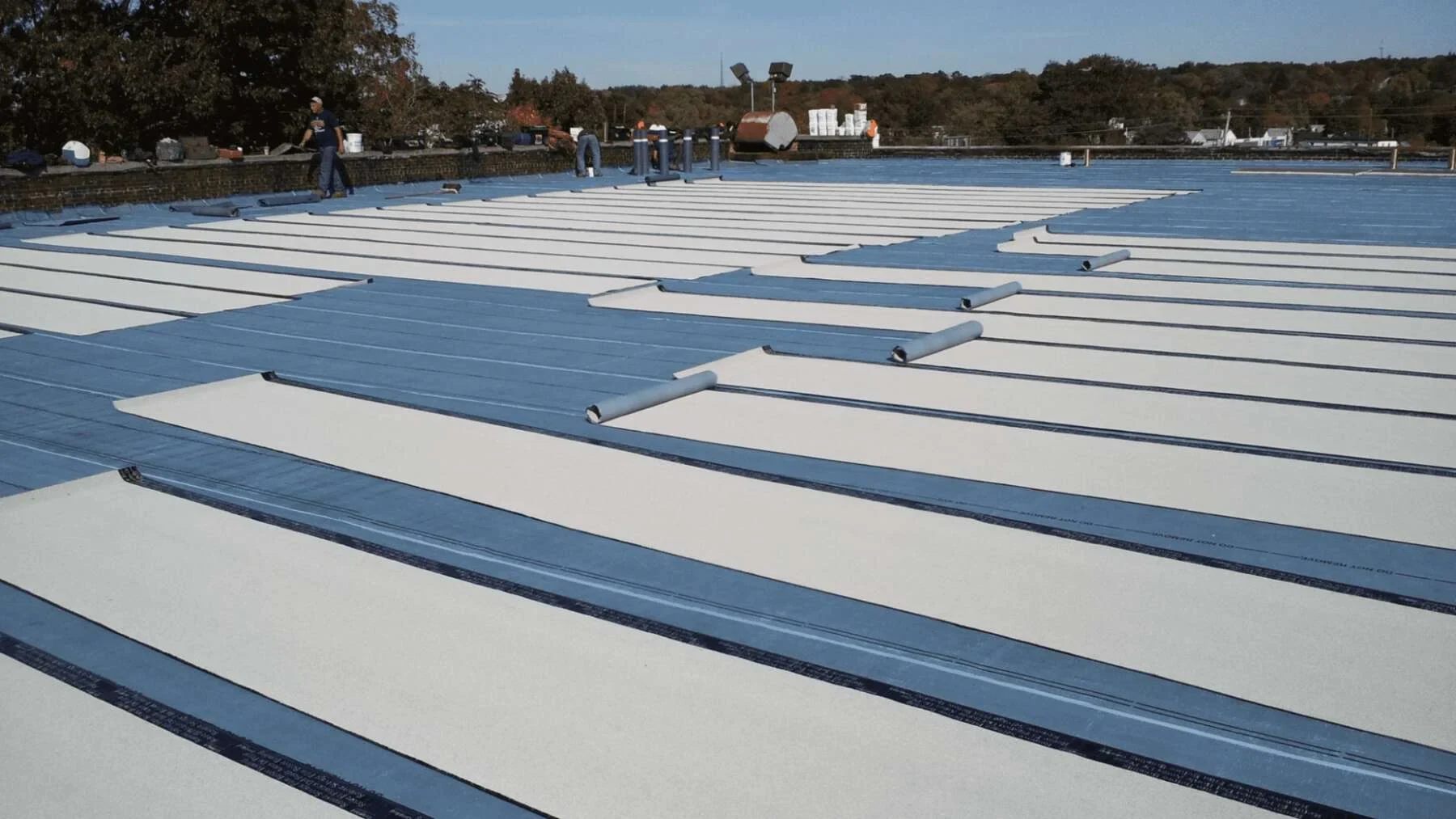
SBS modified bitumen systems are typically installed in two or more plies, which gives an aging roof deck a level of redundancy a single-ply membrane doesn't offer. If one ply develops a small issue, the layer beneath it is still doing its job. On an older downtown building where we don't always know the full deck history, that redundancy is a real advantage over betting everything on one membrane layer.
Torch, Hot-Mop, or Cold-Adhesive Application
SBS modified bitumen can be installed by torch application, hot asphalt mopping, or cold adhesive, and the right method depends on the building's occupancy, fire code considerations, and deck type. Torch application requires strict fire-watch protocols, which matters on an occupied downtown building with tenants below. We evaluate application method against the specific building before quoting the job, not as a default choice.
Granulated Cap Sheets and UV Exposure
The mineral granules embedded in an SBS cap sheet do double duty - they protect the underlying bitumen from direct UV exposure and they're available in reflective colors that cut surface heat gain somewhat, though not to the degree a white single-ply membrane does. For a downtown building where the roof isn't hidden from street view, granule color is sometimes an aesthetic consideration as much as a performance one, and we tell owners which is which.
Insulation Retrofit During an SBS Re-Roof
A modified bitumen re-roof is often the one time in a building's life an owner has ready access to add or upgrade roof insulation without extra mobilization cost, since the roof is already being opened up. Many of downtown Laredo's older buildings were built to a much lower insulation standard than current energy codes call for, and adding insulation board as part of the re-roof scope is usually far cheaper than doing it as a standalone project later. We flag that option on every SBS quote for an older building, even though it adds to the upfront cost, because the alternative is re-roofing again in fifteen years with the same underlying insulation gap unaddressed.
- Existing deck and insulation condition assessed before ply count is decided
- Fire-watch protocol planned before any torch-applied work begins
- Parapet and coping detail matched to the building's original roof design
- Drain and scupper condition checked, since older downtown roofs often have inadequate drainage by current standards
- Cap sheet color selected for both reflectivity and street-facing appearance where relevant
Ponding and Parapet Detail on Flat Downtown Roofs
Older flat roofs downtown were frequently built with less roof slope than current design practice calls for, which means ponding water is a real and recurring issue on some of these buildings regardless of membrane choice. SBS modified bitumen handles occasional ponding reasonably well compared to some coatings, but chronic ponding will shorten any membrane's service life, and on these re-roof jobs we look hard at whether tapered insulation to correct drainage is worth adding to the scope before membrane goes down.
Where SBS Beats Single-Ply on These Buildings
Beyond matching existing roof design, SBS modified bitumen tends to handle foot traffic and incidental damage from rooftop equipment servicing a bit more forgivingly than a thinner single-ply sheet, which matters on downtown buildings where rooftop HVAC and communications equipment access is frequent. It's also a system most local roofing crews and inspectors are deeply familiar with, which can simplify permitting and inspection on older municipal or civic buildings.
A downtown building that's changed hands several times often comes with incomplete roof records, and we treat that gap as something to document rather than guess past. Before quoting an SBS re-roof, we open test cuts at a few locations to confirm deck type, ply count, and insulation condition, and we photograph what we find. That record becomes the baseline for the new roof's own documentation, which matters later if a wind or hail claim ever needs to distinguish pre-existing conditions from storm damage.
Questions About SBS Modified Bitumen
Is modified bitumen outdated compared to single-ply membranes?
No - it's a different system with different strengths, particularly redundancy and forgiveness of foot traffic, and it remains a sound choice on buildings originally designed for it.
Can you install SBS modified bitumen with a torch on an occupied building?
Yes, with a proper fire-watch protocol in place; we plan that protocol before scheduling any torch-applied work on an occupied structure.
How does SBS handle Laredo's summer heat compared to TPO?
A dark cap sheet runs hotter than a white single-ply membrane, though reflective granule cap sheets narrow that gap; we discuss the tradeoff against the building's specific needs.
What causes most modified bitumen roof failures you see?
Chronic ponding water and inadequate original drainage design are the most common underlying issues we find on older downtown roofs, more often than a problem with the membrane itself.
Do you recommend adding tapered insulation during a re-roof?
Where ponding is a known issue, yes - we'll quote it as an option and explain the drainage improvement it provides, rather than just replacing the membrane on the same flawed slope.