Spray Foam Roofing for Irregular Rooflines and Insulation Upgrades
Spray polyurethane foam is a different category from every membrane on this list - it's applied as a liquid that expands and cures into a rigid, insulating, waterproof layer in one step. That makes it a strong option on buildings with irregular rooflines, existing insulation problems, or roof geometry that would be expensive to detail with sheet membrane.
Foam as Insulation and Membrane in One Application
Most single-ply and modified bitumen systems separate the insulation layer from the waterproofing membrane. SPF combines both functions - the foam itself provides insulating value while its cured surface, protected by a coating, provides the waterproof layer. On a building where insulation performance genuinely matters, that combination can outperform adding insulation board under a separate membrane, particularly on older buildings that were under-insulated to begin with.
Where SPF Solves Problems Single-Ply Can't
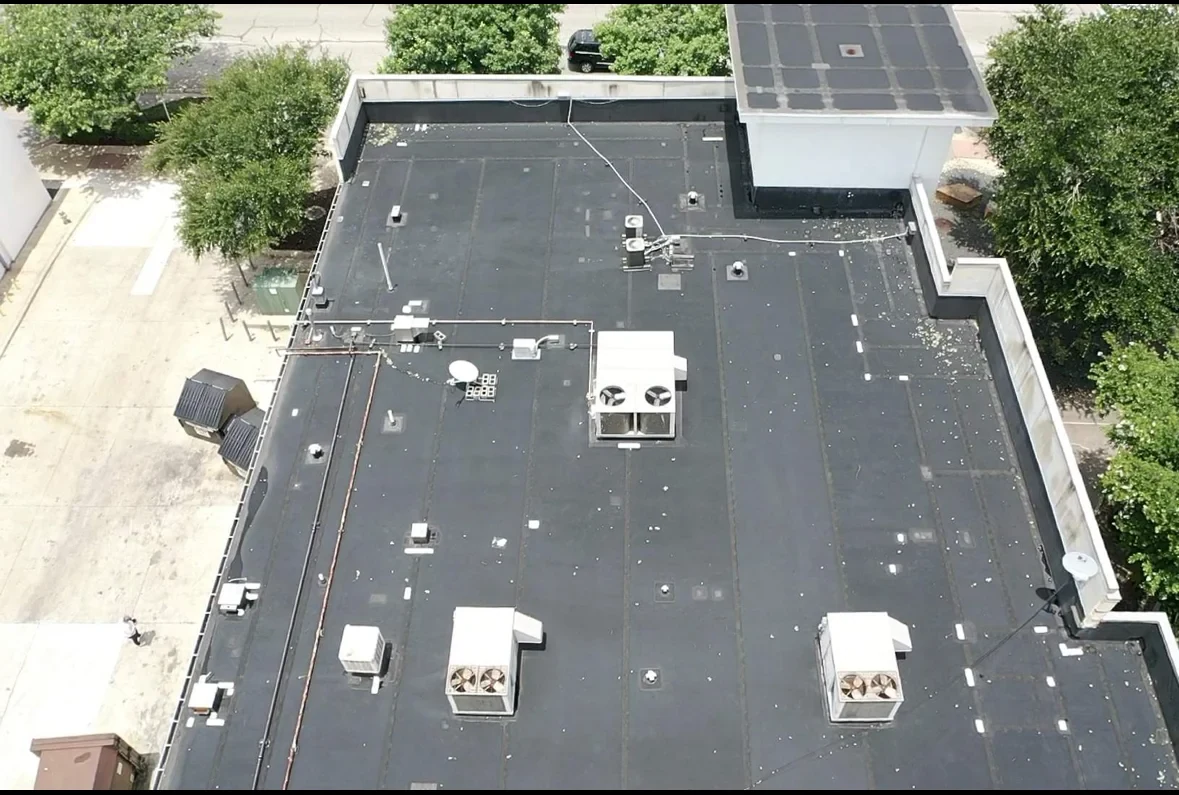
Roofs with unusual geometry - lots of curbs, pipe penetrations, HVAC equipment clusters, or an irregular roofline from additions built over the years - are expensive and detail-heavy to flash correctly with sheet membrane. Foam flows around and seals those details as part of the application itself, which is a real practical advantage on a complicated older building rather than a newer, simpler warehouse box.
UV Exposure and the Recoat Requirement
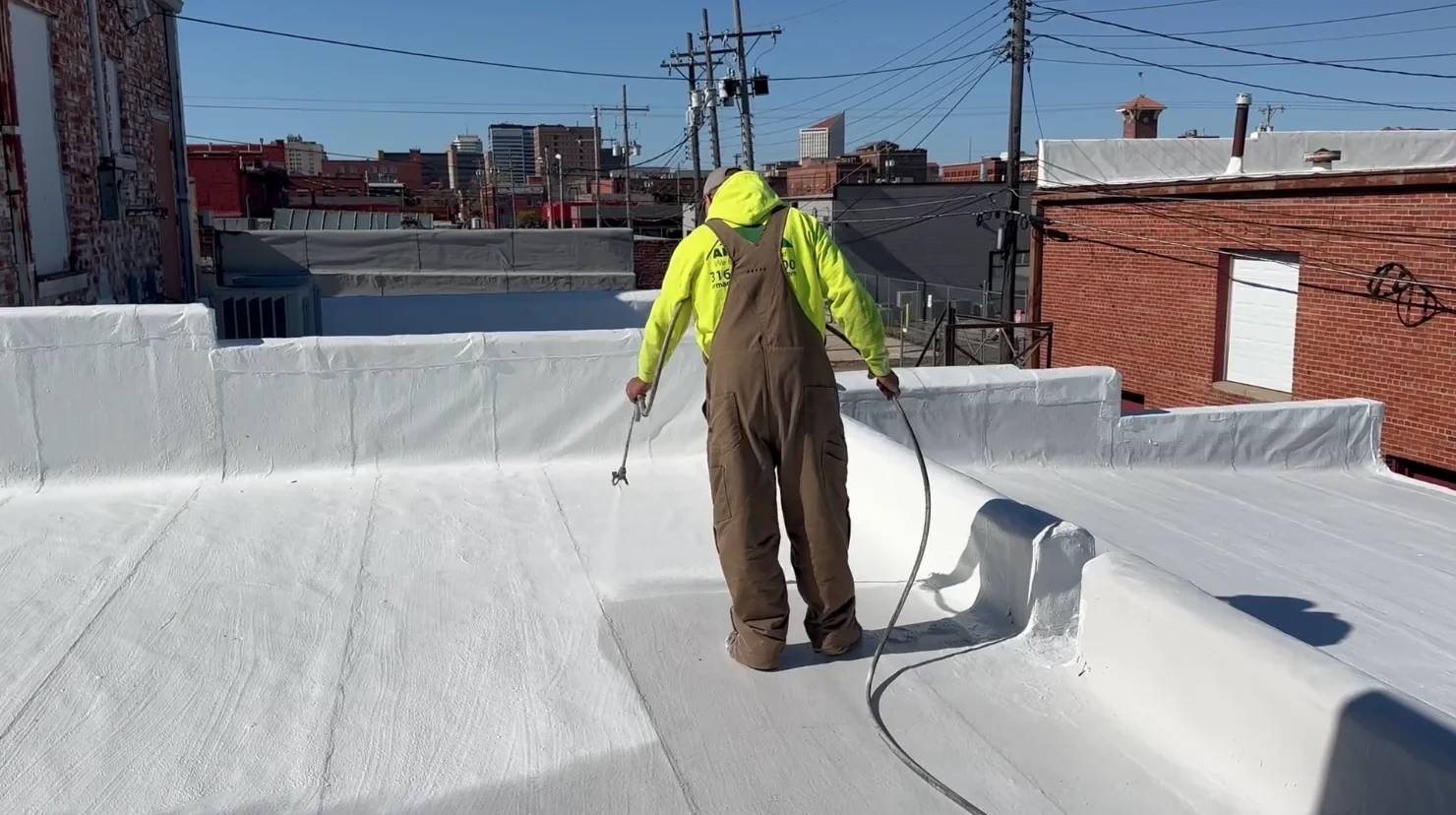
Cured SPF is not UV-stable on its own and requires a protective coating - typically silicone or acrylic - to shield it from sun exposure. That coating is not optional and not a one-time application; it needs periodic recoating over the roof's life, similar to the maintenance cycle on a coated single-ply roof. Laredo's UV exposure makes this recoat schedule a real, non-negotiable line item in the long-term cost of an SPF roof, and we tell owners that clearly before they commit to the system.
Freeze Events and the Lesson From Winter Storm Uri
Deep South Texas doesn't plan around hard freezes the way northern climates do, which is part of why Winter Storm Uri in February 2021 caused so much building damage here - insulation systems and rooftop equipment weren't built with that kind of cold in mind. SPF's insulating performance is a genuine advantage in a rare freeze event, since it reduces the thermal shock a roof deck and rooftop equipment experience when temperatures crash unexpectedly. We don't oversell this as a primary reason to choose SPF, since freeze events here are infrequent, but it's a real secondary benefit worth mentioning to owners weighing the option.
Maintenance Inspections After Initial Application
An SPF roof needs a different inspection routine than a membrane roof. We're looking for coating wear, foam surface chalking, and any spots where hail or foot traffic has broken through the protective coating layer down to bare foam, because bare foam exposed to direct sun degrades quickly once the coating is compromised. We recommend a walk-through after any significant hail event specifically for SPF roofs, separate from the standard annual inspection, since a small coating breach that goes unnoticed for a season can turn into a real repair.
- Existing roof geometry assessed for how much SPF's detailing advantage actually matters
- Application conditions checked against temperature and humidity limits before spraying
- Foam thickness applied per the engineered specification, verified by core sample
- Protective coating applied at manufacturer-specified thickness immediately after cure
- Recoat interval documented and communicated as an ongoing maintenance requirement
Application Conditions and Humidity
SPF application is more sensitive to weather conditions at the time of spraying than most membrane installs - humidity, dew point, and surface moisture all affect how the foam cures. We track weather conditions closely during application windows and won't spray in conditions outside the manufacturer's specified range, even if that means adjusting the schedule around one of Laredo's sudden pop-up thunderstorm systems.
That sensitivity is also why SPF projects sometimes take longer from start to finish than a comparable single-ply job even on a similar-sized roof. We build weather contingency into the schedule up front rather than promising a fixed completion date that a single bad-humidity morning could blow through.
Crews also monitor deck moisture before spraying begins, since foam applied over a damp substrate won't bond or cure correctly regardless of the air conditions above it. That check happens the morning of application, not days in advance, because conditions on a Laredo roof deck can change quickly overnight.
Questions About Spray Foam Roofing
Is spray foam a good fit for a standard warehouse box?
It can be, but its biggest advantages show up on buildings with complicated geometry or existing insulation problems; on a simple, well-insulated warehouse, a single-ply membrane is often the more straightforward and economical choice.
How often does the protective coating need to be reapplied?
That depends on coating type and UV exposure; we inspect coating condition periodically and recommend a recoat before the underlying foam is exposed, rather than waiting for visible damage.
Does spray foam actually help during a rare freeze event like Uri?
Its insulating value does reduce thermal shock during sudden cold snaps, though we present that as a secondary benefit rather than the main reason to choose the system in a climate where freezes are rare.
Can spray foam be applied over an existing roof?
In many cases yes, provided the existing roof and deck are structurally sound and reasonably dry; we evaluate the existing assembly before recommending foam over a tear-off.
What voids an SPF roof's performance most often?
Skipped or delayed recoating is the most common cause of premature SPF roof problems we see; the foam itself is durable, but it depends entirely on its protective coating staying intact.