Office Roofs Near the Bridge Sit Above Paperwork That Can't Get Wet
Office buildings downtown and near the World Trade Bridge house customs brokers, freight forwarders, and logistics firms running paper files and computer systems that a roof leak can damage in minutes. We treat these buildings' roofs with that in mind, not as generic office space.
Paper Files and Server Rooms Change the Risk Calculation
A customs brokerage or freight forwarding office often keeps active paper documentation on-site alongside servers and networking equipment, and a roof leak over either one is a bigger problem than water on an empty conference room floor.
When we inspect office roofs in this market, we ask facility contacts what's directly below sensitive areas so we know where to prioritize attention and where a slower response is genuinely lower-risk.
For any active leak, we prioritize response over document and server storage areas first, and document that response the same way we would for any other emergency dry-in.
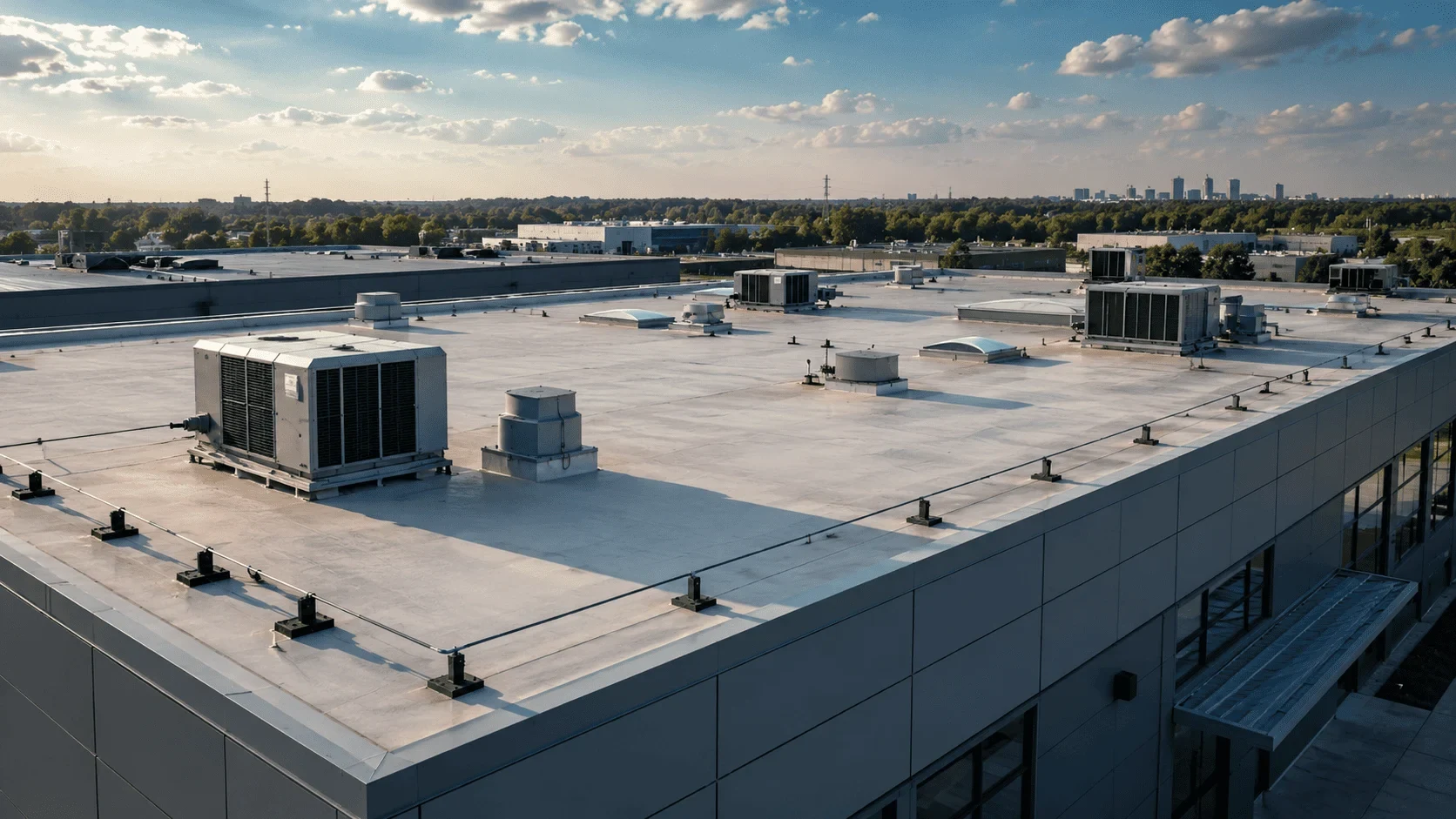
Several of these office buildings also carry HVAC and IT closet cooling units on the roof that run around the clock to keep server rooms at temperature, and a curb failure on one of those units is functionally the same emergency as a membrane leak, just with a different repair.
Discreet Work for a Professional Tenant Base
Office tenants running client-facing operations don't want visible construction disruption, dust tracked through a lobby, or crews interrupting client meetings, and we plan access routes and material staging to keep our footprint away from tenant-facing areas as much as the building allows.
We coordinate with property management on which entrances and stairwells we can use, and we schedule the loudest work outside standard business hours when the building's use allows it.
For multi-tenant office buildings, we confirm with each affected tenant which hours work best before starting anything directly above their suite.
We also keep our crew's parking and staging out of visitor parking areas wherever the property allows it, since a client pulling into a customs brokerage's lot for an appointment shouldn't have to navigate around roofing equipment to find a space.
For office suites that handle sensitive shipment paperwork tied to active customs filings, we've found that a short advance notice to the tenant, even for routine inspection visits, goes a long way toward keeping the relationship easy, since nobody likes an unannounced crew walking the roof above their files.
Older Downtown Buildings Versus Newer Business Park Construction
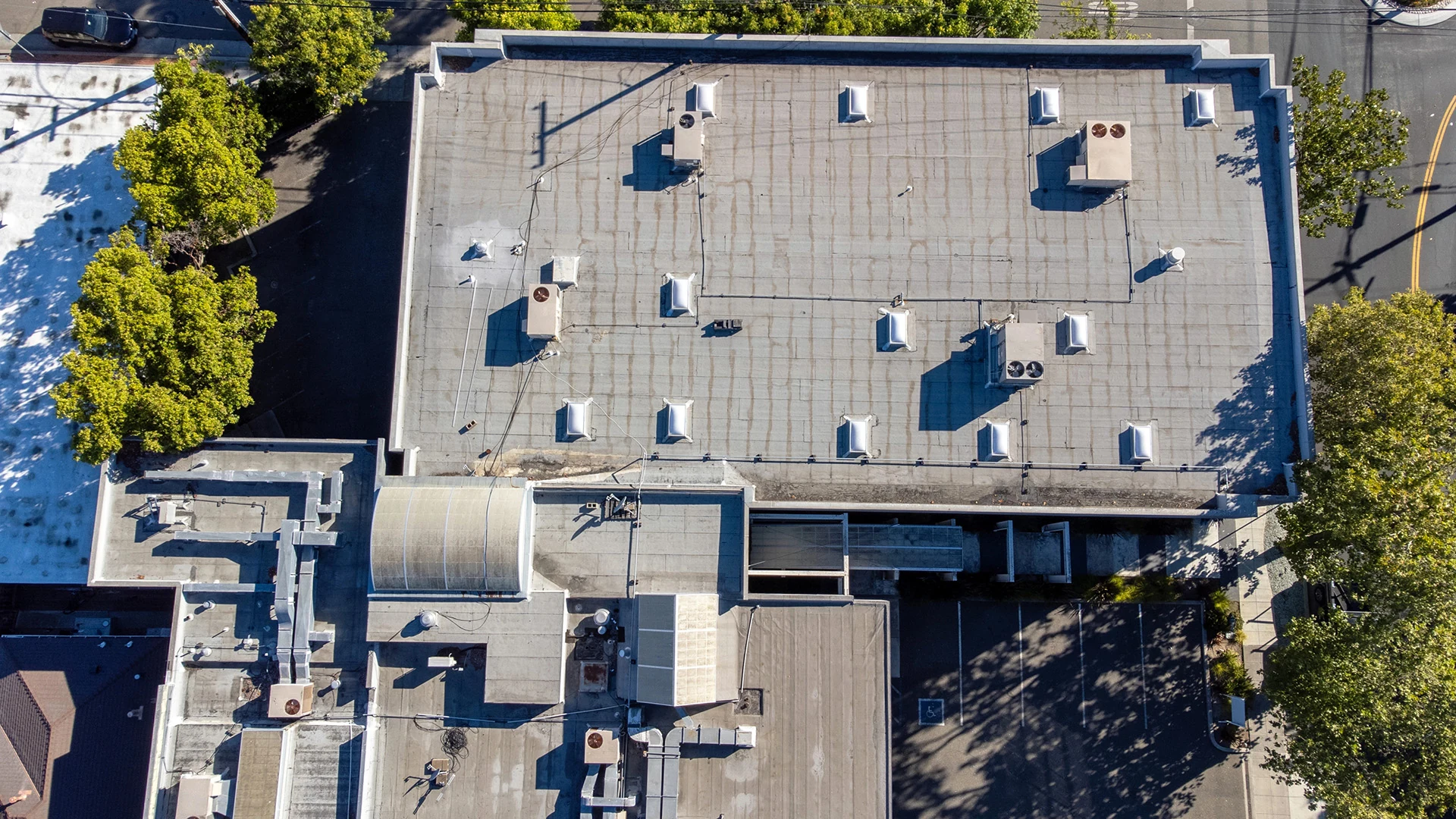
Downtown Laredo office buildings serving customs brokers tend to be older structures with built-up or modified bitumen roofs added in phases, while newer office and business park buildings closer to the bridge more often have single-ply membrane installed at construction.
We evaluate each building on its own roof history rather than applying one standard recommendation to every office property, since the right repair or replacement approach differs significantly between an older downtown structure and a newer business park building.
For older buildings with roofline visibility from the street, we also account for any appearance considerations that come with a downtown commercial district location.
- Roof condition surveys with sensitivity to document and server room areas
- Discreet scheduling around client-facing office operations
- Built-up and modified bitumen repair for older downtown buildings
- Single-ply membrane replacement for newer office park construction
- Emergency leak response prioritized by what's below the roof section
- Multi-tenant office building coordination by suite
Reporting Property Managers Can Forward As-Is
Office property managers in this market often manage the building for an owner who isn't local, and our reports are written clearly enough to forward as-is without needing a follow-up call to interpret them.
We note roof section, condition, and recommended action in plain language, and we flag anything urgent separately from routine maintenance items so a property manager can act on priorities quickly.
When storm damage occurs, we document it the same way, giving the property manager a record that supports both immediate repair decisions and any insurance claim that follows.
For buildings that changed ownership recently, we've also provided our inspection history to a new owner's due diligence team, since a documented roof condition record ahead of a sale is often more useful to a buyer than a single walkthrough during closing.
We keep our invoicing and scope language consistent across visits too, so a property manager tracking building expenses across a portfolio of downtown offices can line up roof spending against the same categories from one property to the next.
Questions Office Property Managers Ask
How do you handle roof leaks near document storage or server rooms?
We ask facility contacts what's below each roof section during inspection so we know where to prioritize response if a leak occurs.
Can you schedule work outside business hours to avoid disrupting tenants?
Yes, where the building's use allows it, we schedule the loudest phases outside standard hours and coordinate directly with affected tenants.
Do older downtown office buildings need a different roofing approach than newer ones?
Usually, yes. Older buildings often have built-up or modified bitumen systems added in phases, while newer construction typically has single-ply membrane, and each calls for a different repair approach.
How do you coordinate work in a multi-tenant office building?
We confirm scheduling with each affected tenant before working directly above their suite, in addition to the property manager.
What kind of report do you provide after an inspection?
A plain-language report by roof section noting condition and recommended action, with anything urgent flagged separately from routine items.