Warehouse Roofs Sized for Laredo's Cross-Dock Volume
Laredo moves more truck freight than any other port on the southern border, and most of that freight passes across a roof deck before it ever reaches a trailer. We repair and replace low-slope membranes on cross-dock and general warehouse buildings from Killam Industrial Park to the Unitec corridor, working around live dock schedules instead of shutting them down.
Cross-Dock Roofs Carry More Rooftop Equipment Than the Building Looks Like It Should
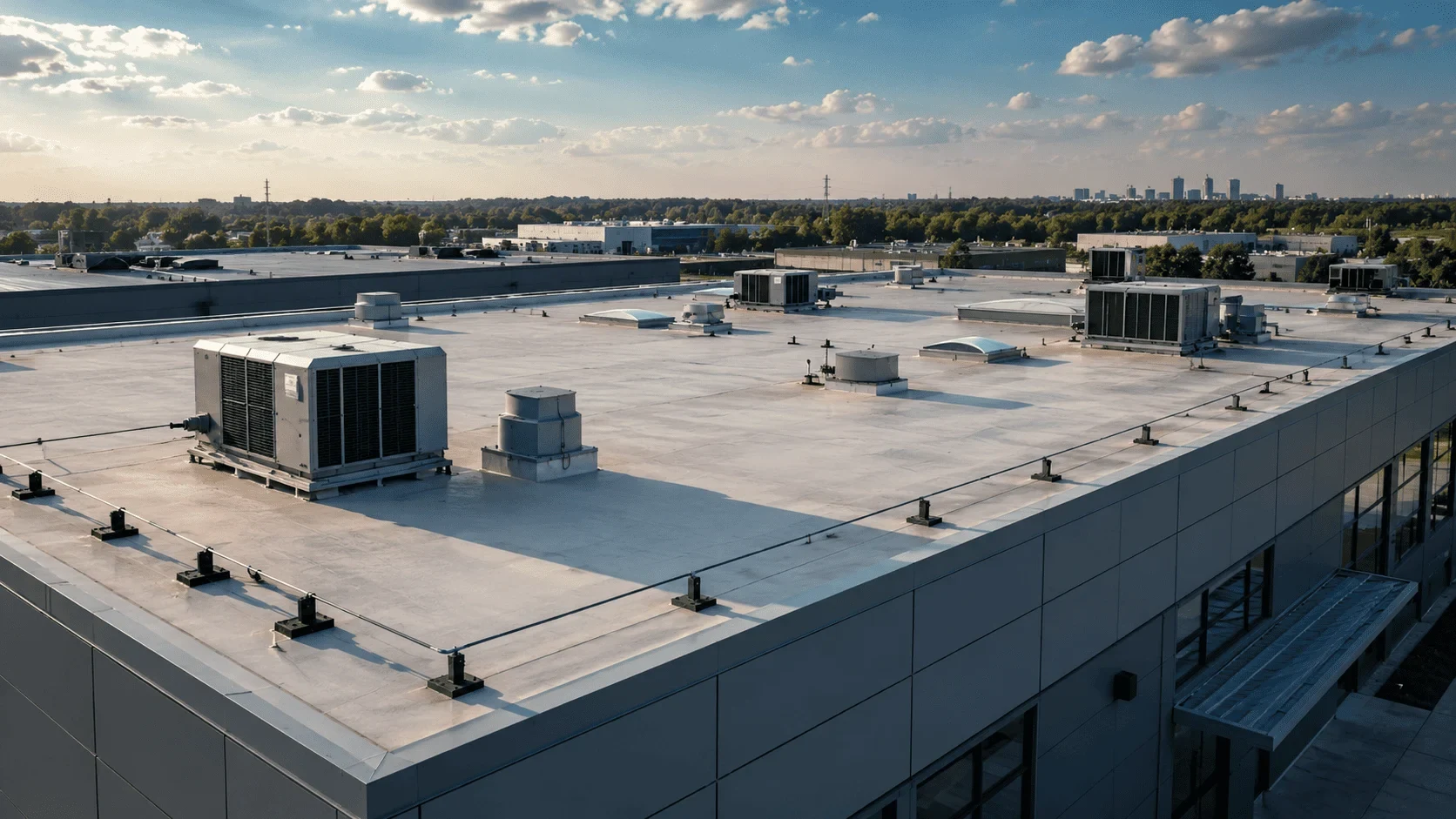
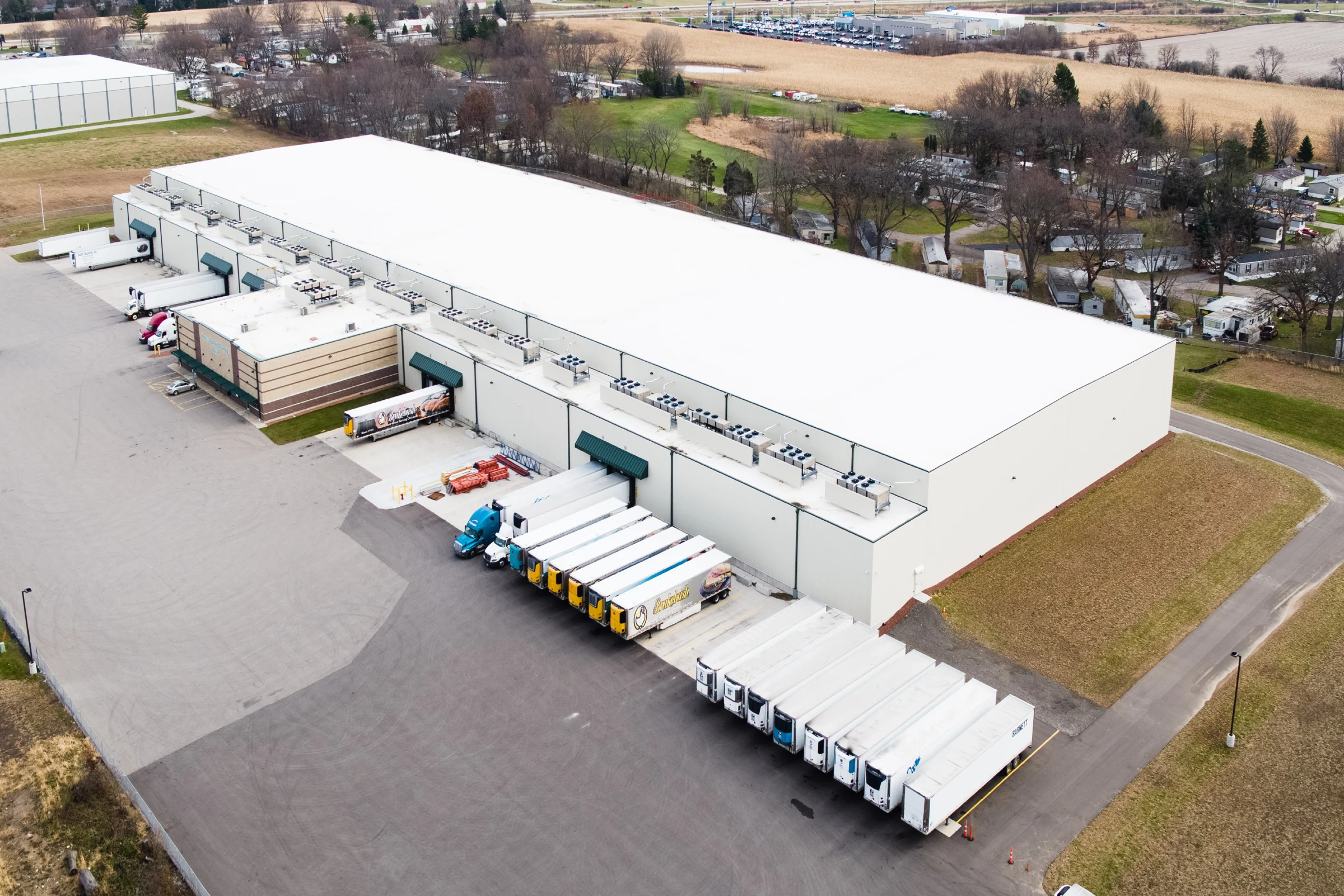
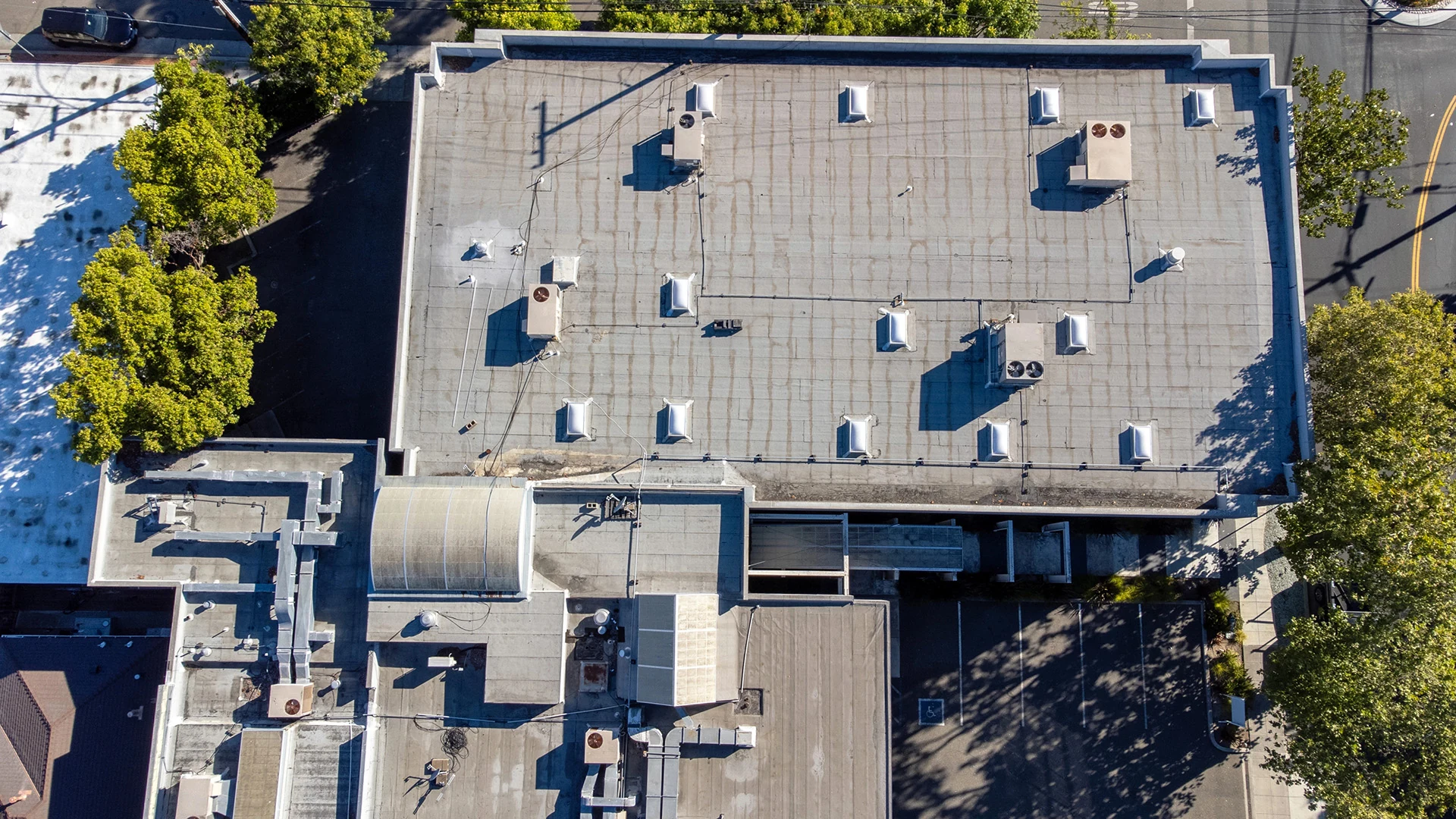
A typical cross-dock terminal near the World Trade Bridge has dozens of dock doors on two sides and a roof deck that has to support HVAC units, exhaust fans, skylights, and sometimes a second-story mezzanine's worth of rooftop units added years after the original build. Every one of those penetrations is a place water can get in if the flashing wasn't detailed for Laredo's heat cycling.
When we inspect a warehouse roof in this market we walk every penetration individually rather than assuming a blanket coating will cover for bad flashing underneath. On buildings this size that means hours on the roof, not a drive-by look from the parking lot.
Cross-dock operators run freight on tight windows, so we schedule penetration work and section replacement around the loading dock's shift pattern, not the other way around.
Trailer traffic circling a cross-dock building also means our crews stage material away from active yard lanes, since a warehouse this busy can't have a forklift route blocked by a pallet of shingles or a dumpster for the day.
Reflective Membrane Matters More Here Than in Most Markets
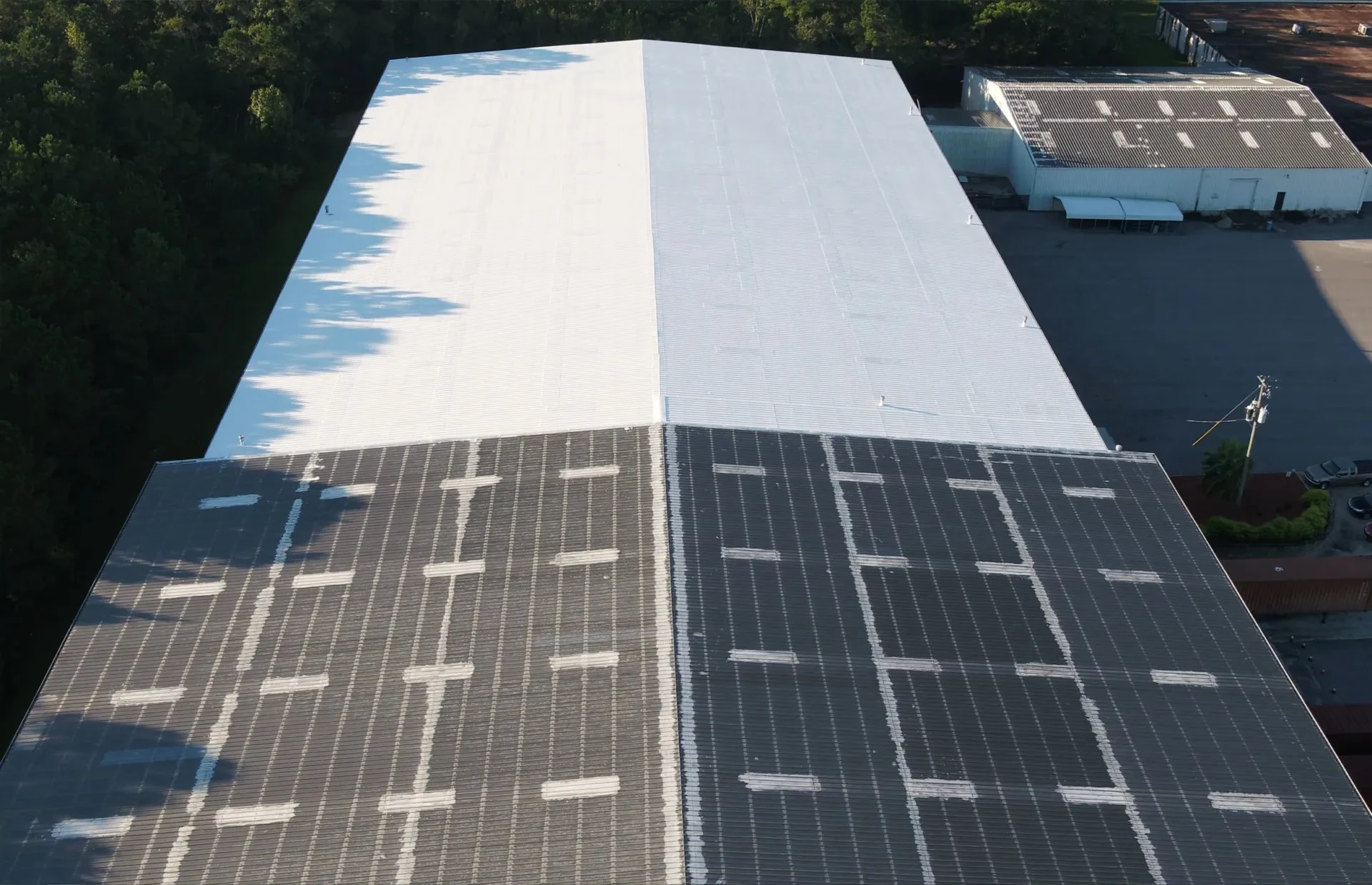
Laredo summers put roof surface temperatures well above the air temperature reading on the local forecast, and a dark roof over a warehouse full of freight and forklifts adds heat load the HVAC system has to fight all day. TPO in white or light gray keeps surface temperatures down and slows the membrane's own aging.
We see EPDM roofs from earlier builds holding up structurally but showing UV-driven surface cracking faster than the same material would in a milder climate. That's a coating or overlay conversation, not necessarily a full tear-off.
For new installs and full replacements we default to a reflective TPO system sized to the building's actual dock configuration, not a generic spec pulled off a shelf.
Ponding on Large Flat Decks
A warehouse roof the size of a typical Killam or Unitec building often runs several hundred feet in one direction, and even a well-installed deck develops low spots over time as the structure settles. Ponding water sits, evaporates, and leaves behind the kind of standing residue that breaks down membrane faster than dry weathering ever would.
We map ponding areas with a level and photos before we quote anything, because a tapered insulation fix in the right three spots is a different job and a different price than a full re-slope.
Summer thunderstorms here can drop a lot of rain in a short window, and a roof that drains slowly on a normal day drains even slower once six inlets are competing for the same low point.
- Cross-dock and general freight warehouse roof replacement
- Reflective TPO conversion for heat-load reduction
- Tapered insulation and ponding correction
- Rooftop penetration and equipment curb detailing
- Scheduled inspection around dock shift patterns
- Emergency tarp and dry-in after storm damage
Storm Response Without Shutting Down the Dock
When wind or hail damages a warehouse roof, the first conversation with an insurance carrier goes better with dated photos of the damage and the pre-loss roof condition than it does with a verbal description. We document before we tarp, and we document again after, so the claim file matches what actually happened on the deck.
We tarp and dry in the affected section fast enough to keep freight and inventory below it from taking secondary water damage, then sequence the permanent repair around whatever the dock is still running.
We don't promise a claim outcome. What we control is showing up with the paperwork a claims adjuster actually needs to move the file.
Even outside of storm season, we recommend a standing inspection schedule for warehouse roofs this size, since a fastener pattern loosening or a seam starting to lift is far cheaper to correct in a routine visit than after months of unnoticed water intrusion into the insulation layer below.
What Warehouse Owners in Laredo Usually Ask
How long does a warehouse roof replacement take on a building this size?
It depends on square footage and how much of the deck needs tapered insulation versus a straight recover, but we sequence a large cross-dock roof in sections so the building stays operational the whole time.
Can you work without shutting down loading dock operations?
Yes. We coordinate crew movement and material staging around active dock doors and build a schedule around your shift pattern rather than asking you to pause freight.
Do you handle both metal and membrane warehouse roofs?
Most of the warehouse stock we see in the Killam and Unitec area is low-slope membrane over metal deck, but we also work on standing seam metal roofs where the building was built that way originally.
What causes most of the leaks you find on Laredo warehouses?
Failed flashing around rooftop equipment and skylights, more often than membrane failure in the open field. Heat cycling loosens sealant and fasteners around penetrations faster here than in milder climates.
Will a roof coating fix a roof that's already leaking?
A coating extends the life of a sound membrane and helps with reflectivity, but it isn't a repair for active leaks or failed flashing. We inspect first and tell you honestly which category your roof is in.